
Marin · Generator Installation & Repair
Whole House Generators
Permanently installed home standby sets that start themselves within seconds of an outage and carry the entire property.
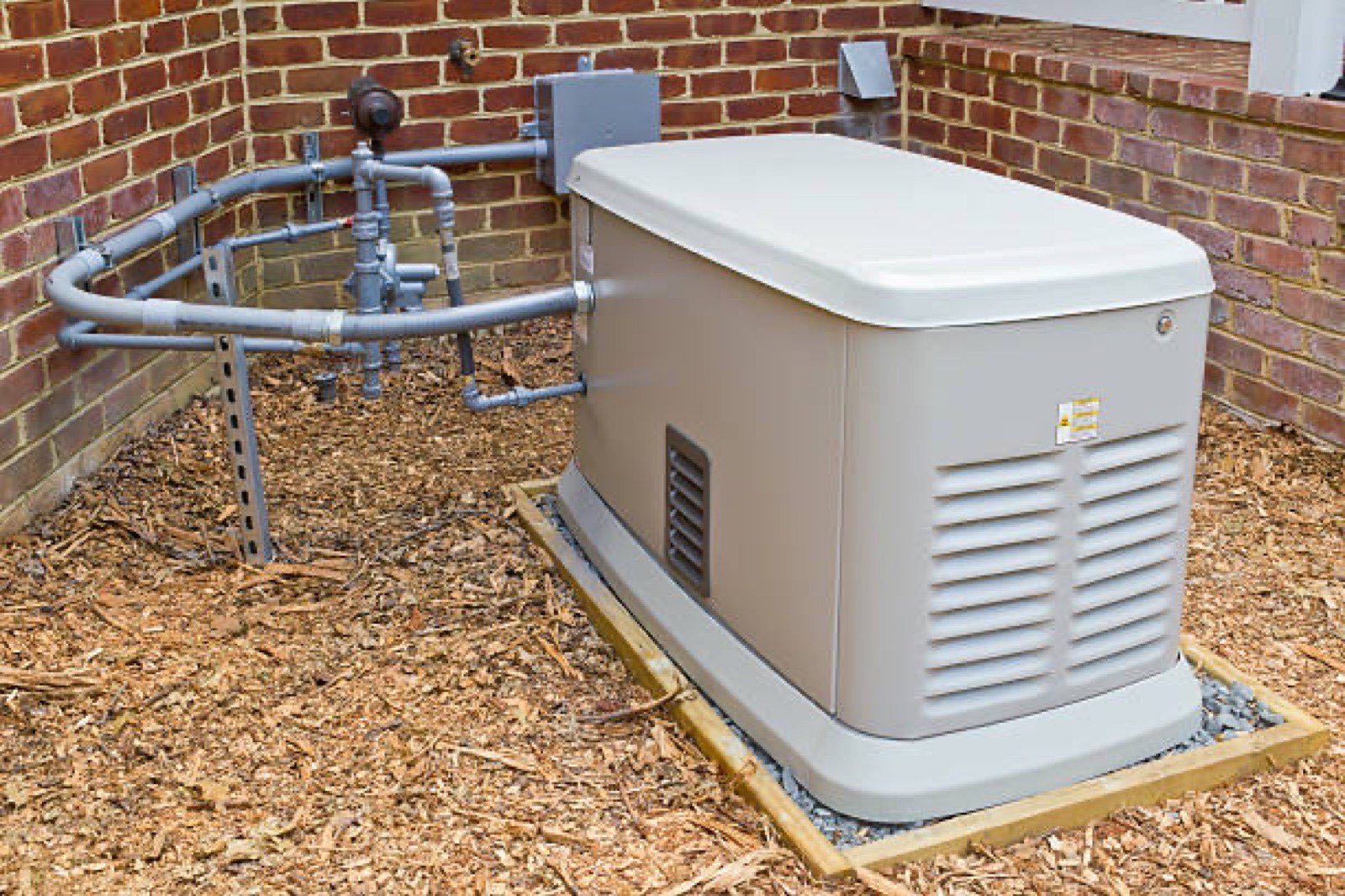
Whole House Generators · Marin
What A Home Standby Installation Covers
A whole house generator is a permanently installed machine that sits outside on a concrete pad, wired into your electrical service through an automatic transfer switch and fed from the natural gas main or a propane tank. When the utility supply drops, the controller waits a few seconds to confirm the outage is real, starts the engine, transfers the house across, and runs until the power comes back. Nobody has to be home, nothing has to be plugged in, and the changeover takes about ten to thirty seconds from the lights going out. We install these across all ten Marin towns we cover, on natural gas where PG&E serves the street and on propane where it does not, and we handle the permit, the inspection and the gas work rather than leaving you to coordinate three trades. The unit we specify depends on what you actually want running, which is why the visit starts with your panel rather than with a catalogue. Where a household only needs the essentials covered rather than everything, that is a smaller and cheaper backup generator and we will say so.

Why Go With Us
The equipment in this trade is broadly the same wherever you buy it. What differs is whether the machine was sized against your real load, sited somewhere the town will actually approve, and commissioned properly under load rather than started once in the yard. We are a licensed electrical contractor working out of one shop in San Rafael, we do our own gas work and our own permit filings, and the person who surveys your property is on the crew that installs it. Marin is also a county where the siting rules bite: setbacks, noise limits, flood elevations, design review and a gas meter that often needs upsizing. Getting those wrong is what turns a two-week project into a three-month one.
- Sized off a measured load and your actual panel, not a square-footage rule of thumb that sells the biggest available machine.
- Permits, plan checks and the final inspection filed and attended by us in every town we cover, including the design review boards that care.
- Gas work done in-house, including the PG&E meter upsize order that is usually the longest lead time in the whole project.
- Generac, Kohler, Cummins and Champion units installed and serviced, so the recommendation is not decided by the one brand we happen to carry.
- Commissioned under real load with the transfer tested, not started in the yard and signed off.
- The same crew comes back for the annual service, which is why we care what the machine will be like to work on in year five.
Reasons To Install A Whole House Generator
The calls we get fall into a handful of clear situations:
Public safety power shutoffs keep taking your street out
Much of western and northern Marin sits in a high fire threat district, and a dry autumn wind event can cut power pre-emptively for a day or longer in perfectly clear weather. It is predictable, it is warm, and it lasts as long as the wind does. A standby set rides through it without anybody being home.
Winter storms drop the line and it stays down
The canyon and hillside streets run overhead conductors under a heavy tree canopy. A wet January storm brings a limb across a line and the repair crew has to reach somewhere genuinely difficult. Two-day outages are normal in Fairfax, Mill Valley and the upper Ross Valley.
Your water comes from a well
A property on a well loses its water at the same moment it loses its power, and on a fire-weather day it loses hose pressure too. This is the single most common reason rural Marin households stop thinking about a generator and buy one.
Somebody in the house depends on power
Home oxygen, a CPAP machine, refrigerated medication, a mobility lift, or a home office where a day offline costs real money. Once power stops being a convenience, a portable unit in the garage is not a serious plan.
You are already opening the walls
A remodel, a panel upgrade or a solar and battery project is the cheapest moment to add standby power, because the conduit runs, the trenching and the service work are happening anyway.
You are protecting the contents rather than the comfort
Wine storage, a freezer, aquariums, a saltwater tank or a heating system that will freeze pipes if it stops in January. The equipment is cheap compared with what a long outage costs in these houses.
Tell us what has to keep running and roughly how long an outage lasts on your street, and we will size it on the call. Call: 415-324-4858
How We Work
A site visit that opens the panel, a flat written price, permits filed by us, and a machine commissioned under load.
1. The site visit
We look at the electrical panel, the gas meter, the possible equipment positions and the distances between them. We measure the setbacks to the property line and to any openable window, and we go through the load list with you: what must run, what would be nice, and what can wait. That visit produces the size, the position and a flat written price.
2. Permits and the gas order
We file the electrical and mechanical permits with your town and, where the design review board has a say, we take the siting drawing to them. At the same time we place the PG&E meter upsize order if the existing meter will not carry the generator on top of your other appliances, because that is usually the longest lead time in the job.
3. Installation
The pad goes down, the unit is set and levelled, the transfer switch goes in beside the meter, and the gas and electrical runs are made. A natural gas install on a straightforward property is a one-day job for a crew of two; propane, a panel upgrade or a difficult hillside position pushes it to two or three.
4. Commissioning and handover
We start it, run it under real load, watch the transfer in both directions, set the weekly exercise cycle to a sensible morning, and walk you through the controller. The inspection follows, we attend it, and you get the paperwork.
Sizing, Fuel, Transfer Switches And Brands
The decisions that actually shape the quote:
Sizing a home standby generator
Most Marin houses land between 14kW and 26kW on an air-cooled machine. A smaller unit covering essential circuits starts around 10kW to 14kW. Larger properties with pool equipment, several HVAC zones, a well pump and outbuildings usually need a liquid-cooled set in the 30kW to 60kW range. The number comes from adding up the real loads and, critically, the starting surge of the biggest motor rather than its running draw.
Natural gas generators
Where PG&E serves the street, gas generators are the simplest option: no tank to site, no refill schedule and no ceiling on how long the machine can run. The catch is the meter, which frequently has to be upsized to carry the generator alongside the furnace, the range and the water heater.
Propane and diesel
Past the last gas main, in parts of Fairfax, west Novato and the higher lots elsewhere, propane is the usual answer. It runs clean and stores indefinitely, but a tank holds a finite number of hours and needs a refill plan for a multi-day event. Diesel generators appear at the residential scale only on very large properties, where the run time and the fuel cost per hour start to matter.
Automatic transfer switches
The transfer switch is the part that makes the system automatic and the part that keeps utility crews safe. It watches the incoming supply, signals the engine to start, and physically isolates the house from the grid before connecting it to the generator. A whole-panel switch covers everything; a managed or essential-circuits switch covers a selected subpanel and lets a smaller machine do a bigger job.
Brands we install
Generac generator systems are the volume choice and have the widest parts availability in this county. Kohler generators are well built and quieter in several of their residential sizes. Cummins generator installation work suits the larger liquid-cooled sets and anything commercial-adjacent. Champion generators come up mostly at the portable end. We service all four regardless of who sold them.
Placement, setbacks and noise
The unit has to clear the property line and any openable window by the distances your town enforces, sit on level ground, stay out of a mapped flood elevation, and be reachable for service. Modern air-cooled machines run about 60 to 70 dB at seven metres, and the weekly self-test is the noise neighbours notice. On tight lots in Mill Valley, Tiburon and the Sausalito hillside, an acoustically enclosed liquid-cooled unit earns its extra cost.
Solar, batteries and generators together
A battery covers a short evening outage silently; a generator covers a four-day one. Plenty of Marin houses now have both, and the two can be configured to work together so the battery carries the load and the generator recharges it. That has to be designed rather than assumed, because not every inverter will accept generator input.
What A Whole House Generator Costs In Marin
A complete whole-home installation in this county generally lands between $5,000 and $15,000, covering the equipment, the pad, the transfer switch, the gas and electrical work, the permit and the commissioning. Small essential-circuit systems start near the bottom of that. Large liquid-cooled sets on big properties run above it. What moves the number:
- The size of the machine. This is the single biggest line, and it is set by your load list rather than by the size of the house.
- Air-cooled or liquid-cooled. Air-cooled units cover most homes and cost considerably less. Liquid-cooled sets are quieter, last longer and start around double.
- Whether the electrical service needs upgrading. An older 100-amp panel will not take a whole-panel transfer switch, and a service upgrade adds meaningfully to the job.
- Natural gas or propane. Gas is cheaper to install against. Propane adds the tank, the pad, the setback work and the regulator.
- How far the equipment sits from the panel and the meter. Long conduit and gas runs, trenching, or a hand-carry to a hillside position all add hours.
- Which town you are in. Design review in Tiburon, Belvedere or downtown Larkspur, and flood-elevation work in San Anselmo or the Corte Madera flats, both add drawing time and permit time.
Every quote is a flat written price with the permit and the commissioning inside it. If a smaller system would genuinely serve you, we will quote that instead, and the running costs afterwards are mostly the annual generator maintenance visit. The rest of what we install and rent is set out across our Marin generator installation and repair pages.
Frequently Asked Questions
What size generator do I need for my home?
It depends on what you want running rather than on the square footage. Most Marin homes land between 14kW and 26kW on an air-cooled unit, which covers heating, refrigeration, lighting, outlets, the network and usually one air-conditioning zone. Essential-circuit systems start around 10kW to 14kW. Larger properties with pool equipment, a well pump, several HVAC zones or a guest house generally need a liquid-cooled set of 30kW or more. We size it from your panel and the starting surge of the biggest motor, because that surge is what trips an undersized machine on the first real outage.
How much does a whole-house generator installation cost?
A complete installation in Marin typically runs $5,000 to $15,000 including the unit, the concrete pad, the automatic transfer switch, the electrical and gas connections, the permit and the commissioning. Smaller essential-circuit systems sit at the lower end. Large liquid-cooled units on big properties run above it. A service panel upgrade, a propane tank or a long trench from the meter are the three things most likely to move a quote upward.
How long does the installation take?
The work on site is usually one to three days. A natural gas install on a straightforward property with an adequate panel is often a single day for a crew of two. Propane, a panel upgrade or a difficult hillside position takes two or three. The longer part of the calendar is before we arrive: permits typically take one to three weeks depending on the town, and a PG&E meter upsize can take longer than that, which is why we file both as soon as the job is signed.
Do I need a permit to install a generator?
Yes. Every town in Marin requires an electrical permit, and most require a mechanical or plumbing permit for the gas connection as well. Tiburon, Belvedere, Ross and the Larkspur historic core add design review for anything visible, and parcels in mapped flood zones in San Anselmo and Corte Madera carry elevation requirements. We file the permits, prepare the siting drawing and attend the inspection as part of the price.
What is an automatic transfer switch and do I need one?
It is the device that makes a standby system automatic. It monitors the utility supply, tells the generator to start when the supply fails, and physically disconnects your house from the grid before connecting it to the generator. That isolation is a safety requirement, because backfeeding a dead line can kill the utility crew repairing it. A whole-panel switch covers the entire house; an essential-circuits switch covers a selected subpanel and lets a smaller generator do more.
How far does the generator have to be from the house?
Manufacturers generally require at least 18 inches from the wall and five feet from any openable window, door or vent, with clearance above and in front for airflow and service access. On top of that, each Marin town enforces its own property line setback, and several have noise limits that effectively push the unit further from a neighbour. On a narrow canyon lot there is sometimes only one compliant position, so we measure it at the survey rather than assuming.
How loud is a standby generator?
Modern residential units run roughly 60 to 70 dB measured at seven metres, comparable to a normal conversation or a dishwasher. The part neighbours actually notice is the weekly self-test rather than the outage, so we set that to a mid-morning weekday at the shortest cycle the controller allows. Where lots are tight, a liquid-cooled unit in an acoustic enclosure is meaningfully quieter under load and is worth the difference.
Which fuel is best: natural gas, propane or diesel?
Natural gas is the easiest choice where PG&E serves the street, because there is no tank and no run-time limit. Propane suits properties past the gas main, stores indefinitely and burns clean, but a tank holds a finite number of hours so a multi-day outage needs a refill plan. Diesel gives the most power per unit of size and the longest run time under heavy load, which is why it dominates commercial and industrial work, but it needs fuel storage, periodic polishing and emissions consideration and rarely makes sense on a house.
Does a generator add value to my home?
Industry surveys generally put the effect at roughly 3 to 5 percent of home value, and in a county with repeated public safety shutoffs and multi-day storm outages it is also a feature buyers here ask about specifically. Treat it as a genuine improvement rather than a guaranteed return: the honest reason most people buy is the outages themselves, and the resale effect is a bonus rather than the case for it.
Need power in Marin?
An address, a panel size and a rough list of what has to keep running is all we need. We call back inside one business hour with a free estimate and a flat price.
Or call us now: 415-324-4858