
Marin · Generator Installation & Repair
Industrial Generators
Large diesel and gas sets for manufacturing, cold storage, water systems and any facility where an outage stops production.
Industrial Generators · Marin
What Industrial Standby Power Involves
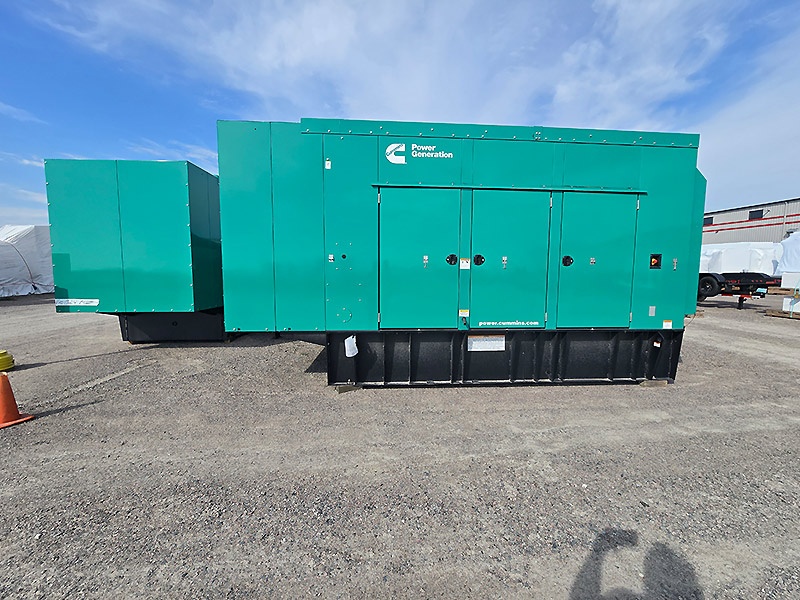
Industrial generators start where the commercial range stops, generally above 150kW and running well into the megawatt class. These are diesel generators almost without exception, skid-mounted or in a weatherproof acoustic enclosure, with their own base fuel tank, a dedicated switchgear arrangement and often a paralleling scheme so two or more sets can share a load or one can be taken out for service without dropping the plant. In Marin the demand comes from a specific set of places: cold storage and food processing, biotech and laboratory buildings in Novato, water and wastewater pumping, telecom and data facilities, hospitals and the larger care campuses, and the light manufacturing around Bel Marin Keys and the Canal district. What they have in common is that an outage does not merely inconvenience them, it destroys product or stops a process that is expensive to restart. We size, install, commission and maintain those systems, and we also supply them temporarily as an industrial generator rental when a plant needs cover during a shutdown.
Why Go With Us
At this scale the equipment is only part of the project. The generator has to be integrated with switchgear, sized against a load study rather than a nameplate total, fed from a fuel system that will actually deliver at full load, exhausted somewhere the air district and the neighbours will accept, and then tested regularly under real load for the rest of its life. Most of the failures we get called to on industrial sets are not engine failures. They are fuel that degraded in a tank nobody polished, batteries nobody replaced, a transfer scheme nobody exercised, or a machine that had run at fifteen percent load for a decade of monthly tests and wet-stacked itself. We do the boring half properly.
- Load studies and, where the picture is unclear, metered recording over a working week rather than a total taken off the nameplates.
- Cummins generators and the other major industrial brands installed and serviced, including sets we did not sell.
- Fuel systems designed and maintained properly: day tanks, transfer pumps, polishing, sampling and scheduled fuel testing.
- Load bank testing so the machine is proven at full output rather than assumed to work.
- Paralleling and redundancy schemes where the plant cannot accept a single point of failure.
- Planned maintenance agreements with defined response times, which is the only version of this that means anything at three in the morning.
Reasons To Install An Industrial Generator
The drivers at this scale are usually concrete and easy to cost:
An outage destroys product
Cold storage, food processing, laboratory freezers and biotech sample libraries all lose inventory the moment temperature control stops. In those buildings the generator pays for itself the first time it runs.
Restarting the process costs more than the outage
Batch manufacturing, coating and curing lines, and anything with a controlled ramp cannot simply be resumed. A short interruption can cost a full shift of work.
Code or a regulator requires it
Healthcare occupancies, high-rise life safety systems, water and wastewater facilities and certain laboratory classifications carry statutory standby requirements with prescribed testing intervals.
Your contracts require continuity
Service level agreements with a customer, a data or telecom tenant, or a pharmaceutical client will often specify standby capacity and evidence that it is tested.
The site is on a line that goes out
Facilities on the fringes of the county, or on distribution that runs through wooded terrain, see the same winter storm and shutoff exposure as the households around them, only with a much larger consequence.
The existing set is at the end of its life
A machine past twenty-five years with obsolete controls, unavailable parts and a wet-stacked engine is a liability rather than an asset. Replacement is often cheaper than the next major repair.
Tell us the facility, the critical loads and whether you have any recorded demand data, and we will scope it properly. Call: 415-324-4858

How We Work
A site visit that opens the panel, a flat written price, permits filed by us, and a machine commissioned under load.
1. The load study
We start from the switchgear and the critical load schedule, not from a nameplate total, and where the picture is unclear we meter the site over a working week to capture the real peaks and the motor starting behaviour. That is what determines the machine size, and it is where most of the money in the project is either saved or wasted.
2. Design and approvals
Machine selection, enclosure and acoustic specification, fuel system, exhaust routing, switchgear and transfer arrangement, and the air district and building approvals that come with a stationary diesel engine in this county. Emissions registration is a real step at this scale rather than a formality.
3. Installation and integration
Foundation or plinth, set placement, fuel and exhaust systems, cabling into the switchgear, controls and remote monitoring. On a live facility this is planned around your production calendar, which usually means phased work and at least one planned shutdown window.
4. Commissioning and load bank testing
The set is proven with a resistive load bank across its full output range, the transfer scheme is exercised in both directions, alarms and remote monitoring are verified, and you get the test records. From there it goes onto a scheduled maintenance agreement.
Diesel Sets, Fuel Systems, Testing And Paralleling
The parts of an industrial installation that decide whether it works in year ten:
Industrial diesel generators
Diesel dominates above roughly 150kW because it gives the most output per unit of size, accepts large block loads without stalling, and carries its own fuel so it is independent of the gas network. Cummins, Caterpillar, Kohler and MTU are the sets we see most in this county. Gas generators appear at industrial scale mainly where emissions or fuel logistics push the decision.
Fuel storage, polishing and testing
Diesel degrades. Water condenses into tanks, microbial growth follows, and filters block at exactly the moment the machine is asked to run for real. A proper fuel regime means periodic sampling, filtration or polishing, and biocide treatment where needed. This is the most commonly skipped item on an industrial set and the most common cause of a failed start.
Load bank testing
Monthly no-load or light-load exercise runs prove that the engine starts, and almost nothing else. A resistive load bank test loads the set to its rated output, verifies it under real conditions, and burns off the unburnt fuel and carbon that light running deposits in the exhaust. Annual load bank testing is a code requirement in some occupancies and a good idea in all of them.
Paralleling and redundancy
Where a facility cannot tolerate losing standby capacity during a service visit, two or more sets are paralleled so they share the load and any one can be isolated. It also allows capacity to be added later without replacing the original machine. The switchgear and controls are the complex part rather than the engines.
Emissions and air district permitting
Stationary diesel engines in the Bay Area are registered and permitted, with limits on annual run hours for testing and maintenance and requirements on engine tier and aftertreatment. Emergency standby use during an actual outage is treated differently from routine running, and the paperwork has to reflect that.
Remote monitoring and alarms
A modern controller will report a failed start, a low fuel level, a low coolant temperature or a charger fault before it matters. On unmanned sites, or a facility where the plant room is visited monthly, that telemetry is the difference between a fault you fix on a Tuesday and one you discover during the outage.
Temporary industrial power
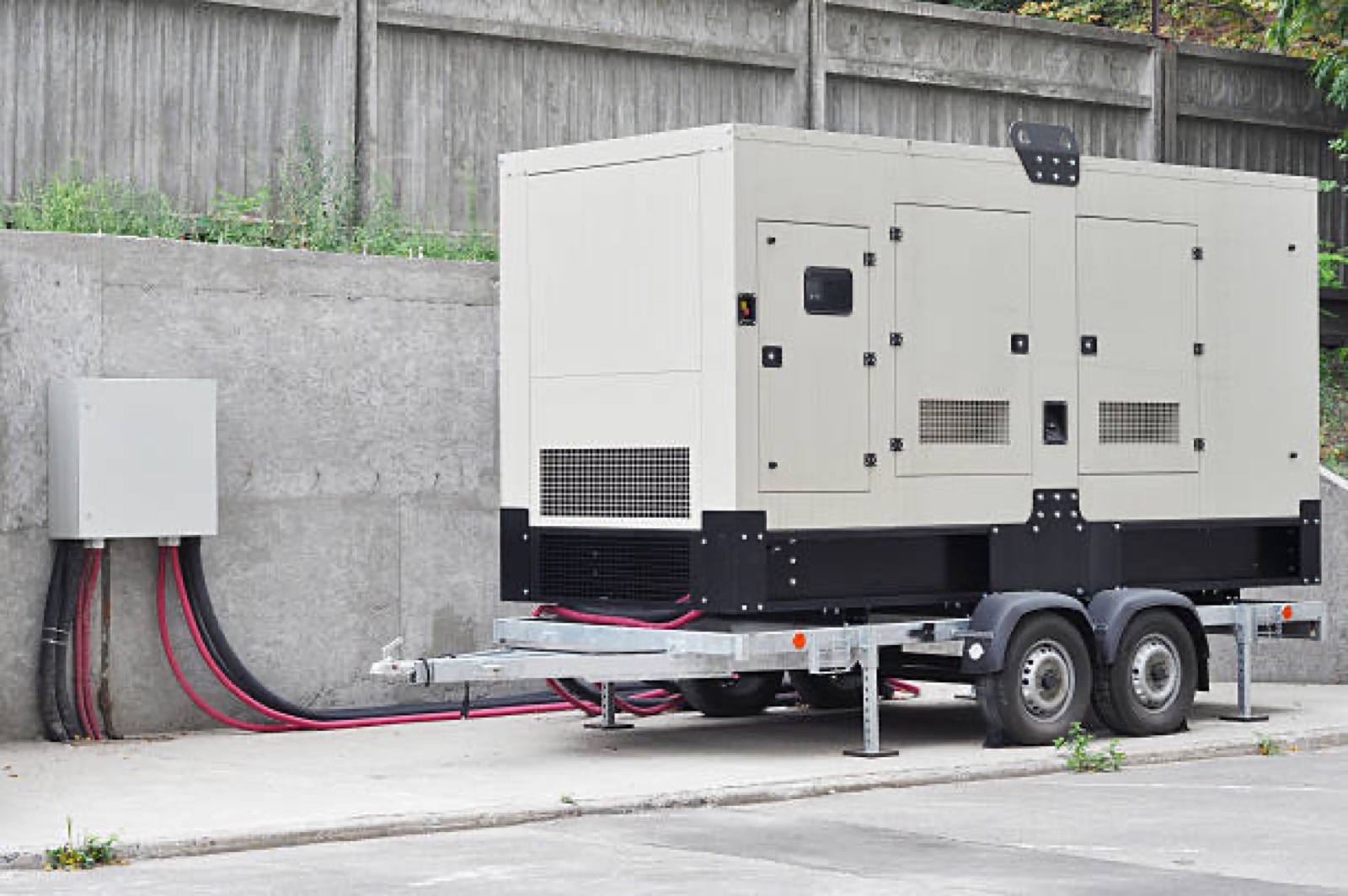
During a generator replacement, a switchgear upgrade or a utility service change, the facility still has to run. A towable or containerised set on hire with cable and distribution covers the gap, and we plan those changeovers so the plant never actually goes down.
What Industrial Generators Cost
Industrial projects are quoted individually because the machine is often less than half the total. A packaged diesel set in the 150kW to 500kW range typically starts in the tens of thousands for equipment alone, and the installed project cost commonly runs to two or three times that once everything below is included:
- The capacity you actually need, which comes out of the load study and is the largest single variable in the whole project.
- Enclosure and acoustic treatment, which is driven by where the set sits and who is nearby.
- The fuel system: base tank or bulk storage, transfer pumps, bunding, and the containment the site requires.
- Switchgear, transfer equipment and any paralleling controls, which on a redundant scheme can rival the cost of an engine.
- Civil work: the plinth or foundation, access, cable routes, exhaust routing and any structural work to carry it.
- Permitting and emissions registration, plus commissioning and load bank testing, which are not optional at this scale.
We scope these properly before quoting rather than pricing off a phone call, and every installed set is offered with a planned generator maintenance service agreement. Smaller facilities are usually better served by a commercial generator, short-term cover comes from our rental fleet, and the rest of our generator installation and repair work across the county follows the same approach.
Frequently Asked Questions
How do you size an industrial generator?
From a load study rather than a nameplate total. We look at the critical load schedule, the motor starting characteristics, any non-linear loads such as variable speed drives and UPS systems, and where the picture is unclear we meter the site over a working week to capture real peaks. Nameplate arithmetic almost always produces a machine that is both too large and wrong, because it captures neither the diversity of the real load nor the surge behaviour that actually sets the requirement.
Why are industrial generators almost always diesel?
Diesel gives the most output for a given physical size, accepts large block loads without stalling, and carries its own fuel so the machine does not depend on a gas network that may be affected by the same event. That independence is the point of a standby set. Gas machines do appear at industrial scale where emissions rules, fuel logistics or run-hour patterns favour them, but diesel is the default above about 150kW.
What is load bank testing and do we need it?
A load bank applies a controlled resistive load so the set can be run at or near its rated output without the facility being involved. It proves the machine under real conditions, which a monthly light-load exercise run does not, and it burns off the unburnt fuel and carbon that light running deposits in the cylinders and exhaust. Some occupancies are required to load bank test annually; for everyone else it is the difference between believing the generator works and knowing it does.
How often does an industrial set need maintenance?
Typically a minor service every six months or 250 running hours and a major service annually, alongside weekly or monthly automatic exercise runs and an annual load bank test. Fuel needs sampling and polishing on a schedule of its own, batteries are the single most common failure item and are replaced on age rather than on test, and coolant needs analysis rather than a glance at the header tank.
Do we need an air district permit for a diesel generator?
Stationary diesel engines in the Bay Area require registration or permitting, with conditions on engine emissions tier, aftertreatment and the number of hours the machine may run annually for testing and maintenance. Running during an actual utility outage is treated separately from routine testing. We handle the application as part of the project and set the testing regime so it stays inside the permitted hours.
Can you install a generator without shutting the facility down?
Mostly, yes. New installations on a site with no existing standby capacity are done live with only the final tie-in needing a window. Replacing an existing set is more involved, and we usually bring in a temporary rental unit to hold the standby duty while the changeover happens, so the facility is never actually without cover.
What happens if our existing generator is 25 years old?
We assess it honestly. Controls obsolescence and parts availability tend to decide it before the engine does, and a set that has spent twenty years running light monthly tests is often wet-stacked and down on output. Sometimes the right answer is a controls retrofit and a proper load bank regime; sometimes the next major repair costs more than a replacement. We will tell you which, with the test data behind it.
Need power in Marin?
An address, a panel size and a rough list of what has to keep running is all we need. We call back inside one business hour with a free estimate and a flat price.
Or call us now: 415-324-4858